
Advertisement
Research ArticleCell biologyImmunologyOncology
Open Access |  10.1172/JCI196379
MAP4K2 suppresses antitumor immunity in a pancreatic cancer model by promoting Treg differentiation
Huai-Chia Chuang,1 Chia-Wen Wang,1 Chia-Hsin Hsueh,1 Yu-Zhi Xiao,1 Ching-Yi Tsai,1 Pu-Ming Hsu,1 Evelyn L. Tan,1 Hsien-Yi Chiu,2 and Tse-Hua Tan1
1Immunology Research Center, National Health Research Institutes, Zhunan, Taiwan.
2Department of Dermatology, National Taiwan University Hospital Hsin-Chu Branch, Hsinchu, Taiwan.
Address correspondence to: Huai-Chia Chuang, 35 Keyan Road, Zhunan 35053, Taiwan. Phone: 886.37.206.166 ext. 37612; Email: cinth@nhri.edu.tw. Or to: Tse-Hua Tan, 35 Keyan Road, Zhunan 35053, Taiwan. Phone: 886.37.206.166 ext. 37624; Email: ttan@nhri.edu.tw.
Find articles by Chuang, H. in: PubMed | Google Scholar
1Immunology Research Center, National Health Research Institutes, Zhunan, Taiwan.
2Department of Dermatology, National Taiwan University Hospital Hsin-Chu Branch, Hsinchu, Taiwan.
Address correspondence to: Huai-Chia Chuang, 35 Keyan Road, Zhunan 35053, Taiwan. Phone: 886.37.206.166 ext. 37612; Email: cinth@nhri.edu.tw. Or to: Tse-Hua Tan, 35 Keyan Road, Zhunan 35053, Taiwan. Phone: 886.37.206.166 ext. 37624; Email: ttan@nhri.edu.tw.
Find articles by Wang, C. in: PubMed | Google Scholar
1Immunology Research Center, National Health Research Institutes, Zhunan, Taiwan.
2Department of Dermatology, National Taiwan University Hospital Hsin-Chu Branch, Hsinchu, Taiwan.
Address correspondence to: Huai-Chia Chuang, 35 Keyan Road, Zhunan 35053, Taiwan. Phone: 886.37.206.166 ext. 37612; Email: cinth@nhri.edu.tw. Or to: Tse-Hua Tan, 35 Keyan Road, Zhunan 35053, Taiwan. Phone: 886.37.206.166 ext. 37624; Email: ttan@nhri.edu.tw.
Find articles by
Hsueh, C.
in:
PubMed
|
Google Scholar
|

1Immunology Research Center, National Health Research Institutes, Zhunan, Taiwan.
2Department of Dermatology, National Taiwan University Hospital Hsin-Chu Branch, Hsinchu, Taiwan.
Address correspondence to: Huai-Chia Chuang, 35 Keyan Road, Zhunan 35053, Taiwan. Phone: 886.37.206.166 ext. 37612; Email: cinth@nhri.edu.tw. Or to: Tse-Hua Tan, 35 Keyan Road, Zhunan 35053, Taiwan. Phone: 886.37.206.166 ext. 37624; Email: ttan@nhri.edu.tw.
Find articles by Xiao, Y. in: PubMed | Google Scholar
1Immunology Research Center, National Health Research Institutes, Zhunan, Taiwan.
2Department of Dermatology, National Taiwan University Hospital Hsin-Chu Branch, Hsinchu, Taiwan.
Address correspondence to: Huai-Chia Chuang, 35 Keyan Road, Zhunan 35053, Taiwan. Phone: 886.37.206.166 ext. 37612; Email: cinth@nhri.edu.tw. Or to: Tse-Hua Tan, 35 Keyan Road, Zhunan 35053, Taiwan. Phone: 886.37.206.166 ext. 37624; Email: ttan@nhri.edu.tw.
Find articles by Tsai, C. in: PubMed | Google Scholar
1Immunology Research Center, National Health Research Institutes, Zhunan, Taiwan.
2Department of Dermatology, National Taiwan University Hospital Hsin-Chu Branch, Hsinchu, Taiwan.
Address correspondence to: Huai-Chia Chuang, 35 Keyan Road, Zhunan 35053, Taiwan. Phone: 886.37.206.166 ext. 37612; Email: cinth@nhri.edu.tw. Or to: Tse-Hua Tan, 35 Keyan Road, Zhunan 35053, Taiwan. Phone: 886.37.206.166 ext. 37624; Email: ttan@nhri.edu.tw.
Find articles by Hsu, P. in: PubMed | Google Scholar
1Immunology Research Center, National Health Research Institutes, Zhunan, Taiwan.
2Department of Dermatology, National Taiwan University Hospital Hsin-Chu Branch, Hsinchu, Taiwan.
Address correspondence to: Huai-Chia Chuang, 35 Keyan Road, Zhunan 35053, Taiwan. Phone: 886.37.206.166 ext. 37612; Email: cinth@nhri.edu.tw. Or to: Tse-Hua Tan, 35 Keyan Road, Zhunan 35053, Taiwan. Phone: 886.37.206.166 ext. 37624; Email: ttan@nhri.edu.tw.
Find articles by Tan, E. in: PubMed | Google Scholar
1Immunology Research Center, National Health Research Institutes, Zhunan, Taiwan.
2Department of Dermatology, National Taiwan University Hospital Hsin-Chu Branch, Hsinchu, Taiwan.
Address correspondence to: Huai-Chia Chuang, 35 Keyan Road, Zhunan 35053, Taiwan. Phone: 886.37.206.166 ext. 37612; Email: cinth@nhri.edu.tw. Or to: Tse-Hua Tan, 35 Keyan Road, Zhunan 35053, Taiwan. Phone: 886.37.206.166 ext. 37624; Email: ttan@nhri.edu.tw.
Find articles by Chiu, H. in: PubMed | Google Scholar
1Immunology Research Center, National Health Research Institutes, Zhunan, Taiwan.
2Department of Dermatology, National Taiwan University Hospital Hsin-Chu Branch, Hsinchu, Taiwan.
Address correspondence to: Huai-Chia Chuang, 35 Keyan Road, Zhunan 35053, Taiwan. Phone: 886.37.206.166 ext. 37612; Email: cinth@nhri.edu.tw. Or to: Tse-Hua Tan, 35 Keyan Road, Zhunan 35053, Taiwan. Phone: 886.37.206.166 ext. 37624; Email: ttan@nhri.edu.tw.
Find articles by
Tan, T.
in:
PubMed
|
Google Scholar
|
Published January 30, 2026 - More info
J Clin Invest. 2026;136(6):e196379. https://doi.org/10.1172/JCI196379.
© 2026 Chuang et al. This work is licensed under the Creative Commons Attribution 4.0 International License. To view a copy of this license, visit http://creativecommons.org/licenses/by/4.0/.
Received: June 4, 2025; Accepted: January 15, 2026


-
Results
To study the in vivo role of MAP4K2 in T cell function, we generated T cell–specific Map4k2 conditional knockout (T-Map4k2 cKO, Map4k2fl/fl;Cd4-Cre) mice by crossing Map4k2-floxed mice to Cd4-Cre transgenic mice. The MAP4K2 levels were successfully abolished in T cells of T-Map4k2 cKO mice (Supplemental Figure 1; supplemental material available online with this article; https://doi.org/10.1172/JCI196379DS1). The development of CD4+ and CD8+ T cell was normal in 4-week-old T-Map4k2 cKO mice (Supplemental Figure 2, A–D). The thymic negative selection was also unaffected by Map4k2 deficiency (Supplemental Figure 2B). Notably, the population of regulatory T cells (Treg, CD4+FOXP3+) was decreased in the spleen and lymph nodes, but not the thymus, of T-Map4k2 cKO mice (Supplemental Figure 2, E–G). To study the T cell profiles and potential immune phenotypes of T-Map4k2 cKO mice, T cells from the spleen and lymph nodes of T-Map4k2 cKO mice were isolated and subjected to single-cell RNA-seq (scRNA-seq) analysis. Dimensionality reduction and clustering analyses showed 10 clusters of T cells from WT and T-Map4k2 cKO mice (Figure 1, A and B, and Supplemental Figure 3A). Notably, expression levels of 34 genes were decreased, while 7 other genes were increased, in T cells of T-Map4k2 cKO mice (Figure 1C). Kyoto Encyclopedia of Genes and Genomes (KEGG) pathway analyses revealed that these 34 downregulated genes in T-Map4k2 cKO T cells belong to IFN-α/β signaling, IL-6 signaling, and regulation of antigen processing and presentation (Supplemental Figure 3B). Interestingly, among the differentially expressed genes in T-Map4k2 cKO T cells, the Treg master transcription factor Foxp3 was significantly decreased (Figure 1C, P = 0.000015). The Foxp3-positive T cells were mainly in the CD4+ Cluster no. 4 and Cluster no. 5, but neither in other CD4+ Clusters nor in CD8+ Clusters (Figure 1, D and E). The Cluster no. 4 and Cluster no. 5 were effector Treg and naive Treg cells, respectively (Figure 1B and Supplemental Figure 3A). The cell numbers of Foxp3-positive T cells were decreased in T-Map4k2 cKO mice compared with those of WT mice (Figure 1E). Consistent with the notion that FOXP3 suppresses the IFN-γ transcription (18), Map4k2-deficient Treg cells displayed a modest increase of IFN-γ transcripts compared with WT Treg cells (fold change: 1.266). The mRNA levels of Treg signature genes, such as cytotoxic T-lymphocyte-associated protein 4 (Ctla-4), programmed death-1 (Pd-1), Il-10, and Il2ra (Cd25) were also significantly decreased in the T cells of T-Map4k2 cKO mice (Supplemental Figure 3C). The decrease of Treg markers (CTLA-4, Helios, and CD25) and effector Treg markers (CD44 and CD62L) in the T cells of T-Map4k2 cKO mice was confirmed by flow cytometry (Supplemental Figure 3, D and E). Notably, CD25 protein levels in the Treg (CD4+FOXP3+) cells of T-Map4k2 cKO mice were comparable with those of WT mice (Supplemental Figure 3E). Interestingly, Map4k2 mRNA levels in WT T cells were correlated with Foxp3 levels (Supplemental Figure 4, A and B). Consistently, Human Protein Atlas (HPA) database showed that MAP4K2 transcripts in Treg subset were more than those in naive CD4 T, naive CD8 T, memory CD4 T, memory CD8 T, and mucosal-associated invariant T cells (Supplemental Figure 4C). MAP4K2 protein levels were increased in Treg cells compared with other T cell subsets (Supplemental Figure 4D); the low MAP4K2 levels in Th1/Th2/Th17 cells also suggest that TCR stimulation would not induce MAP4K2 expression. Furthermore, overexpression of MAP4K2 induced FOXP3 protein levels in murine primary T cells and human peripheral blood T cells (Supplemental Figure 4, E and F). These results suggest that MAP4K2 positively regulates FOXP3 levels and Treg differentiation, especially in effector Treg cells.
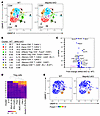 Figure 1
T-Map4k2 cKO mice display a reduction of Treg population. (A and B) Single-cell RNA sequencing data showed the distribution (A) and classification (B) of pooled splenic and lymph node T cells from T-Map4k2 (M4k2) cKO and WT mice. Data are presented in Uniform Manifold Approximation and Projection (UMAP). (C) The volcano plot of the selected differentially expressed genes in the T cells isolated from the spleen and lymph nodes of T-Map4k2 cKO and WT mice. Q-value was determined using Fisher’s exact test. (D) Gene-expression heatmap of the Treg signature genes in each cluster compared with all other clusters. (E) Single-cell Foxp3 expression in T-Map4k2 cKO and WT T cells. M4k2 cKO, T cell–specific Map4k2 conditional knockout (Map4k2fl/fl;Cd4-Cre); WT, WT (Map4k2fl/fl).
To study the effect of MAP4K2 on Treg differentiation, in vitro T cell differentiation was performed using splenic T cells of WT mice and T-Map4k2 cKO mice. Interestingly, in vitro Treg differentiation of T-Map4k2 cKO T cells was reduced compared with WT T cells upon TGF-β stimulation (Figure 2, A and B), while in vitro differentiation of Th1, Th2, and Th17 was unaffected by T-Map4k2 cKO (Supplemental Figure 5, A–H). Next, Treg suppressive function was determined by coculturing of effector T (Teff) cells and Treg cells. The proliferation of CFSE-labeled WT Teff cells was suppressed by WT Treg cells, whereas the proliferation of WT Teff cells was not inhibited by T-Map4k2 cKO Treg cells (Figure 2, C and D). In addition, the T cell proliferation of effector T cells from T-Map4k2 cKO mice were comparable with that of WT mice (Supplemental Figure 5I). Collectively, the data suggest that MAP4K2 is required for Treg differentiation and suppressive function.
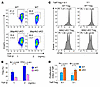 Figure 2
Treg differentiation and Treg suppressive function are attenuated by Map4k2 knockout. (A and B) Flow cytometry analyses of in vitro differentiated Treg (CD4+FOXP3+) cells induced with 1 or 2 ng/mL TGF-β using splenic T cells isolated from 8-week-old mice (A). Mean ± SEM of 3 independent experiments are shown in the panel (B). (C and D) Suppression of CSFE-labeled effector T (Teff) cells by the Treg cells isolated from 8-week-old T-Map4k2 cKO and WT mice (C). Mean ± SEM of 3 independent experiments are shown in the panel (D). M4k2 cKO, T cell–specific Map4k2 conditional knockout (Map4k2fl/fl;Cd4-Cre); WT, WT (Map4k2fl/fl); PI, proliferation index. §P value < 0.05; (1-tailed Student’s t test); *P < 0.05; ***P < 0.001 (2-tailed Student’s t test).
To investigate the mechanism of FOXP3 induction by MAP4K2, we studied whether the methylation of Treg-specific demethylated region (TSDR) is regulated by MAP4K2. The pyrosequencing data showed that TSDR methylation was unaffected in Treg (CD4+CD25+) cells of T-Map4k2 cKO mice (Supplemental Figure 6). Next, to identify the MAP4K2-targeted molecules, MAP4K2-interacting proteins were searched by mass spectrometry analysis of anti-MAP4K2 immunocomplexes isolated from Jurkat T cells upon TCR stimulation. The DEAD box protein DDX39B, a known Treg regulator, was identified as a TCR-signaling–inducible MAP4K2-interacting protein (Figure 3A). DDX39B activates Foxp3 RNA splicing and induces Treg population (19); therefore, we studied whether MAP4K2 induces FOXP3 levels through DDX39B. First, the physical interaction between MAP4K2 and DDX39B was confirmed by reciprocal coimmunoprecipitation (Figure 3B). To further demonstrate the direct interaction of MAP4K2 with DDX39B, cyan fluorescent protein–MAP4K2 (CFP-MAP4K2) and yellow fluorescent protein–DDX39B (YFP-DDX39B) plasmids were transfected into HEK293T cells, followed by fluorescence resonance energy transfer (FRET) analysis. The FRET signals, denoting a protein-protein interaction (<10 nm), were detectable in CFP-MAP4K2 and YFP-DDX39B plasmids-cotransfected HEK293T cells (Figure 3C), while CFP-MAP4K2 or YFP-DDX39B alone did not show any FRET signals. Moreover, the interaction (<40 nm) between the endogenous MAP4K2 and DDX39B proteins in murine Treg cells, but not Th0 cells, was confirmed by in situ proximity ligation assay (PLA) (Figure 3D). Treg differentiation in vitro is induced by TGF-β and IL-2 (1). Consistently, we found that MAP4K2 kinase activity was induced by TGF-β treatment in a dose-dependent manner (Supplemental Figure 7A). Moreover, the interaction between the endogenous MAP4K2 and DDX39B proteins in murine primary T cell was induced upon TGF-β stimulation (Figure 3E). Notably, MAP4K2 protein levels in T cells were not regulated by TGF-β signaling (Figure 3E). In addition, the interaction between MAP4K2 and DDX39B was unaffected by the loss of MAP4K2 kinase activity (Supplemental Figure 7B). These results suggest that TGF-β signaling induces a direct interaction between MAP4K2 and DDX39B in Treg cells. Notably, the nuclear translocation of MAP4K2 and DDX39B proteins was induced in CFP-MAP4K2 and YFP-DDX39B plasmids-cotransfected Jurkat T cells (Figure 3F), whereas MAP4K2 or DDX39B protein mainly localized to the cytoplasm of single plasmid–transfected Jurkat T cells (Figure 3F). It is likely that the interaction between MAP4K2 and DDX39B also facilitates their nuclear translocation.
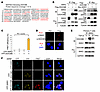 Figure 3
MAP4K2 directly interacts with DDX39B in T cells. (A) The detected peptide sequences (red color) of the endogenous DDX39B proteins by mass spectrometry–based proteomics analyses using the Myc-tagged MAP4K2 immunocomplexes isolated from Jurkat T cells stimulated with anti-CD3 antibody. (B) Reciprocal immunoprecipitation of Flag-tagged MAP4K2 (M4K2) with Myc-tagged DDX39B proteins from lysates of HEK293T cells cotransfected with Flag-MAP4K2 and Myc-DDX39B plasmids. Arrowhead indicates the Flag-tagged DDX39B protein; asterisk indicates heavy-chain signals. (C) FRET analysis of HEK293T cells transfected with indicated plasmids encoding CFP-fused MAP4K2 or YFP-fused DDX39B proteins. Means ± SEM are shown. n = 3. (D) Confocal microscopy of PLA signals for the interaction between the endogenous MAP4K2 and DDX39B proteins in in vitro differentiated Treg cells. For PLA, red dots represent direct interaction signals. Scale bars: 10 μm. (E) Co-IP of the endogenous MAP4K2 and DDX39B proteins from lysates of murine primary T cells stimulated with TGF-β (125 ng/mL). (F) Confocal microscopy of CFP-fused MAP4K2 protein, YFP-fused DDX39B protein, FRET, and DAPI in transfected Jurkat T cells. Merge denotes the merge of all 4 color images. Scale bars: 25 μm. *P < 0.05 (2-tailed Student’s t test). Data shown (B and D–F) are representative of 3 independent experiments.
To validate the role of DDX39B in MAP4K2-mediated increase of Foxp3 mRNA levels in T cells, DDX39B knockout (KO) Jurkat cells were generated by the CRISPR-Cas9 gene targeting approach (Figure 4A). FOXP3 mRNA levels were significantly induced by MAP4K2 overexpression in Jurkat cells, while MAP4K2-induced FOXP3 mRNA levels were abolished by DDX39B knockout (Figure 4B). Foxp3 mRNA levels of peripheral Treg cells were significantly decreased in T-Map4k2 cKO mice compared with those WT mice (Figure 4C). Next, the DDX39B-mediated Foxp3 RNA splicing in peripheral Treg cells of T-Map4k2 cKO mice was evaluated. The ratios of individual introns of Foxp3 pre-mRNA to Foxp3 mRNA levels were increased in T-Map4k2 cKO Treg cells compared with WT Treg cells (Figure 4D). The data showed that Foxp3 mRNA splicing in Treg cells was attenuated by Map4k2 conditional knockout. The enhanced Foxp3 pre-mRNA levels in T-Map4k2 cKO Treg cells may be the reason why the fold change of Foxp3 levels in scRNA-seq (Figure 1C) was underestimated, as scRNA-seq analysis would detect both mRNAs and pre-mRNAs. Collectively, these results suggest that MAP4K2 interacts with DDX39B and subsequently induces Foxp3 mRNA splicing.
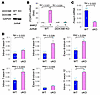 Figure 4
MAP4K2 promotes Foxp3 RNA splicing through DDX39B. (A) Deficiency of DDX39B proteins in DDX39B knockout (KO) Jurkat T cells was confirmed by immunoblotting (upper panel). (B) Real-time PCR of FOXP3 mRNA levels in WT or DDX39B-KO Jurkat T cells transfected with Myc-MAP4K2 (M4K2) plasmid. The mRNA levels of FOXP3 were normalized to GAPDH mRNA levels. Results (mean ± SEM, n = 3) are presented relative to those of vector controls. (C and D) Real-time PCR of Foxp3 mRNA levels (C) and Foxp3 pre-mRNA (individual junction regions across introns-exons) levels (D) in in vitro differentiated Treg cells of T-Map4k2 cKO (cKO) and WT mice. The Foxp3 mRNA levels were normalized to Gapdh mRNA levels (C); individual Foxp3 pre-mRNA levels were normalized to total Foxp3 mRNA levels (D). Means ± SEM are shown. n = 3. §P < 0.05; (1-tailed Student’s t test); *P < 0.05; **P < 0.01 (2-tailed Student’s t test).
Notably, unlike WT MAP4K2, MAP4K2 kinase-dead mutant failed to induce FOXP3 levels in Jurkat T cells (Figure 5A). This suggests that MAP4K2 may phosphorylate its interacting protein DDX39B. Notably, the identified peptides of DDX39B proteins in the MAP4K2-immunocomplexes (Figure 3A) contained 7 serine/threonine phosphorylation sites at Ser38, Ser137, Ser153, Thr344, Thr383, Thr389, and Ser392 residues (Supplemental Figure 8). In vitro kinase assays using purified proteins showed that MAP4K2 phosphorylates DDX39B at a threonine site, while MAP4K2 kinase-dead mutant did not (Figure 5B). To identify the MAP4K2-targeted phosphorylation residue on DDX39B, in vitro MAP4K2-phosphorylated DDX39B proteins were isolated and subjected to mass spectrometry analyses. Thr389 and Thr344 on DDX39B protein were identified as MAP4K2-phosphorylated sites (Figure 5C). Mimicking MAP4K2-phosphorylated DDX39B protein, phosphomimetic DDX39B (T389D) mutant, but not (T344D) mutant, induced Foxp3 mRNA levels (Figure 5D). Interestingly, DDX39B phosphomimetic (T344D) mutant protein was mainly restricted to the cytoplasm (Figure 6A), whereas DDX39B phosphomimetic (T389D) mutant protein was restricted to the nucleus (Figure 6A). These results suggest that MAP4K2-induced DDX39B Thr389, but not Thr344, phosphorylation is responsible for DDX39B nuclear translocation and subsequent FOXP3 induction. Moreover, the reduction of FOXP3 mRNA levels and FOXP3 protein levels in MAP4K2-KO Jurkat T cells and Map4k2-cKO T cells, respectively, was reversed by overexpression of DDX39B phosphomimetic (T389D) mutant protein in the absence of TGF-β stimulation (Figure 6, B–D). Conversely, MAP4K2-induced DDX39B nuclear translocation was inhibited by overexpression of DDX39B phosphodeficient (T389A) mutant in the presence of MAP4K2 (Figure 6E). Collectively, MAP4K2 directly phosphorylates DDX39B at Thr389 residue and subsequently induces DDX39B nuclear translocation, leading to FOXP3 mRNA splicing and Treg differentiation.
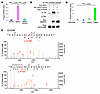 Figure 5
MAP4K2 directly phosphorylates DDX39B at Thr389 residue. (A) Real-time PCR of FOXP3 mRNA levels in Jurkat T cells transfected with either Myc-MAP4K2 (M4K2) WT or kinase-dead (K45A) plasmid. The mRNA levels of FOXP3 were normalized to GAPDH mRNA levels. Results (mean ± SEM, n = 3) are presented relative to those of vector controls. (B) In vitro kinase assays of purified Myc-tagged MAP4K2 WT or kinase-dead (K45A) mutant proteins, using purified Flag-tagged DDX39B proteins as substrates. Phosphorylation of DDX39B was determined by immunoblotting analyses using anti-pan-phospho-serine (p-Ser) and anti-pan-phospho-threonine (p-Thr) antibodies. (C) Mass spectrometry analysis of the tryptic peptides from the DDX39B proteins phosphorylated by MAP4K2 to identify the peptide containing phosphorylated Thr389 or Thr344 residue on DDX39B. (D) Real-time PCR of FOXP3 mRNA levels in Jurkat T cells transfected with either Flag-DDX39B WT or phosphomimetic (T344D or T389D) mutant plasmid. The FOXP3 mRNA levels were normalized to GAPDH mRNA levels. Results (mean ± SEM, n = 3) are presented relative to those of vector controls.
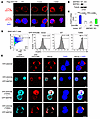 Figure 6
DDX39B Thr389 phosphorylation promotes its nuclear translocation. (A) Confocal microscopy of either Flag-tagged DDX39B WT or phosphomimetic (T344D or T389D) mutant proteins in the transfected Jurkat T cells. Nuclei were stained with DAPI. Scale bars: 10 μm. (B) Deficiency of MAP4K2 proteins in MAP4K2 knockout (KO) Jurkat T cells was confirmed by immunoblotting (C) Real-time PCR of FOXP3 mRNA levels in WT or MAP4K2 KO Jurkat T cells transfected with either Flag-DDX39B WT or phosphomimetic (T389D) mutant plasmid. The mRNA levels of FOXP3 were normalized to GAPDH mRNA levels. Results (mean ± SEM, n = 3) are presented relative to those of vector controls. (D) Flow cytometry analyses of the rescue of FOXP3+ cells in T-Map4k2 conditional knockout (M4k2 cKO) T cells transfected with either GFP-DDX39B WT or phosphomimetic (T389D) mutant plasmid. n = 4. (E) Confocal microscopy of CFP-fused MAP4K2, YFP-fused DDX39B, and YFP-fused DDX39B phosphodeficient (T344A or T389A) mutant proteins, as well as DAPI in the transfected Jurkat T cells. Scale bars: 10 μm. **P < 0.01 (1-way ANOVA and Tukey’s post hoc test). Data shown (A–E) are representative of 3 independent experiments.
Treg quantity and function are defected in autoimmune disease (20). Notably, T-Map4k2 cKO mice did not manifest spontaneous autoimmune symptoms and displayed normal levels of autoantibodies (Figure 7A). The induction of experimental autoimmune encephalomyelitis (EAE) is initiated by inflammatory Th1 and Th17 cells during the acute phase, and the EAE induction in the remission phase is attenuated by Treg cells. To study the role of MAP4K2 in Treg function in vivo, we performed the EAE model using T-Map4k2 cKO mice. After myelin oligodendrocyte glycoprotein (MOG) immunization, the clinical score of T-Map4k2 cKO mice during the acute phase was comparable with that of WT mice (Figure 7B). The clinical score of WT mice during the remission phase was declined as expected (Figure 7B), whereas the clinical score of T-Map4k2 mice remained high during the remission phase (Figure 7B). The levels of proinflammatory cytokines IL-17A, IL-6, and IFN-γ were higher in the serum of T-Map4k2 cKO mice than those of WT mice (Figure 7C). In contrast, the levels of anti-proinflammatory cytokine IL-10 were significantly decreased in T-Map4k2 cKO mice (Figure 7C). T-Map4k2 cKO mice also showed reduction of CNS-infiltrating Treg cells during the remission phase (Figure 7, D and E). The levels of infiltrating Th17 cells were increased, but the levels of Treg cells were decreased, in the brain tissue of T-Map4k2 cKO mice compared with those of WT mice (Figure 7E). Moreover, in vitro MOG-restimulated IL-17A, IL-6, and IFN-γ production was increased in lymph node T cells isolated from MOG-immunized T-Map4k2 cKO mice, whereas IL-10 production was decreased (Figure 7F). To validate the MAP4K2 function in Treg-mediated attenuation of autoimmunity, the EAE model was performed using Treg-specific Map4k2-deficient (Map4k2fl/+;Foxp3-Cre) mice (Supplemental Figure 9). The MOG-immunized Treg-specific Map4k2-deficient mice displayed similar phenotypes (Supplemental Figure 9) to those of T Map4k2 cKO mice (Figure 7). These results suggest that MAP4K2 plays a critical role in Treg suppressive function in vivo.
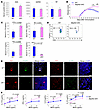 Figure 7
T cell–specific Map4k2-cKO mice display sustained induction of MOG-induced autoimmune encephalomyelitis. (A) ELISA of serum anti-ANA, anti-double strain DNA (dsDNA), and rheumatoid factor (RF) of 24-week-old T-Map4k2 cKO (cKO) or WT (WT) mice. n = 5. (B–F) Induction of MOG-induced experimental autoimmune encephalomyelitis (EAE) using T-Map4k2 cKO or WT mice. Clinical scores of mice are shown in mean ± SEM (B, n = 8). The cytokine levels in the sera of mice on day 26 of the MOG-induced EAE model were determined using ELISA assays (C, mean ± SEM, n = 5). Infiltrating Treg cells in the brain of diseased mice were determined by flow cytometry (D, n = 5). Confocal microscopy analyses of CD3 (red), FOXP3 (green, left panel), IL-17A (green, right panel), and DAPI in the brain tissues from diseased mice (E). Scale bars: 25 μm. MOG-specific T cell–mediated cytokine production was determined using ELISA assays (F, n =5). T cells were isolated from the lymph nodes of MOG-immunized mice on day 26 after immunization, followed by in vitro stimulation with MOG for 72 hours. §P < 0.05; (1-tailed Student’s t test); *P < 0.05; ***P < 0.01; ***P < 0.001 (2-tailed Student’s t test). M4k2 cKO, T cell–specific Map4k2 conditional knockout (Map4k2fl/fl;Cd4-Cre); WT (Map4k2fl/fl). Data shown are representative of 3 independent experiments.
Treg cells also play a critical role in the suppression of anti-tumor immunity. We next studied whether MAP4K2 regulates Treg-mediated antitumor immunity using syngeneic KPC pancreatic cancer model. After subcutaneous injection with KPC pancreatic cancer cells for 9 days, the tumor tissues on the back of tumor-bearing mice were evident in both WT and T-Map4k2 cKO mice (Figure 8, A and B). The tumor-bearing mice were then injected with anti–PD-1 antibody or IgG control antibody every 3 days. The tumor volumes were slightly decreased in anti–PD-1–treated WT mice compared with the control antibody group (Figure 8C). Interestingly, tumor volumes were significantly decreased in T-Map4k2 cKO mice compared with those of WT mice (Figure 8C). Moreover, the infiltrating Treg population was drastically reduced in the tumor tissues of T-Map4k2 cKO mice treated with either control antibody or anti–PD-1 antibody (Figure 8D). The percentages of CTLA-4+ CD8+ (exhausted) (21, 22) cytotoxic T cells were also decreased in the tumor tissues of T-Map4k2 cKO mice (Figure 8D). Furthermore, IHC assays showed that DDX39B proteins were mainly localized in the nucleus of FOXP3+ T cells in the tumor tissue of WT mice, whereas DDX39B proteins were mainly localized in the cytoplasm of Map4k2 cKO T cells (Supplemental Figure 10). The data support that MAP4K2 induces DDX39B nuclear translocation and subsequent FOXP3 expression in tumor-infiltrating Treg cells.
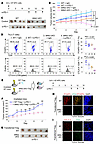 Figure 8
MAP4K2 deficiency in T cells strengthens cancer immunotherapy in mice. (A–D) Induction of syngeneic pancreatic cancer model in T-Map4k2 (M4k2) cKO and WT mice by subcutaneous injection with KPC pancreatic cancer cells. Tumor-bearing mice were intraperitoneally injected with 200 μg anti–PD-1 antibody or control antibody (IgG) on days 9, 12, and 15 (A). n = 4 per group. Tumor volumes of the tumor tissues on the back of tumor-bearing T-Map4k2 cKO or WT mice were measured from day 9 to day 16 (B). Tumor tissues were harvested from the backs of mice on day 16 (C). The tumor-infiltrating Treg (CD4+FOXP3+) cells and CD8 T cells of tumor tissues were determined by flow cytometry (D). (E–I) Induction of syngeneic KPC pancreatic cancer model in irradiated WT mice transferred with Treg cells from T-Map4k2 (M4k2) cKO or WT mice. Tumor-bearing mice were intraperitoneally injected with 200 μg anti–PD-1 antibody on days 9, 12, and 15 (E). n = 5 per group. Tumor volumes of the tumor tissues on the back of tumor-bearing T-Map4k2 cKO or WT mice were measured from day 9 to day 17 (F). Tumor tissues were harvested from the back of mice on day 17 (G). The tumor-infiltrating Treg (CD4+FOXP3+) cells and exhausted (CTLA-4+) CD8+ T cells of tumor tissues were detected by confocal microscopy (H and I). For (B and D), *P < 0.05; **P < 0.01 (1-way ANOVA and Tukey’s post hoc test); for (F), *P < 0.05; **P < 0.01 (2-tailed Student’s t test).
To study the intrinsic role of MAP4K2 in Treg-mediated antitumor immunity, Treg cells from T- Map4k2 cKO or WT mice were adoptively transferred into the irradiated recipient mice, followed by the injection of KPC tumor cells to the back of the recipient mice. The tumor-bearing mice were injected with anti–PD-1 antibody every 3 days (Figure 8E). The recipient mice transferred with T-Map4k2 cKO Treg cells displayed a reduction of tumor volumes compared with those of recipient mice transferred with WT Treg cells (Figure 8, F and G). The recipient mice transferred with T-Map4k2 cKO Treg cells also displayed a decrease of the tumor-infiltrating Treg cells and exhausted (CTLA-4+) CD8+ T cells (Figure 8, H and I).
To further validate the intrinsic role of MAP4K2 in Treg-mediated antitumor immunity, we also performed syngeneic KPC pancreatic cancer model using Treg-specific Map4k2-deficient (Map4k2fl/+;Foxp3-Cre) mice (Figure 9, A–G). The tumor-bearing mice were injected with anti–PD-1 antibody every 3 days. The tumor volumes were significantly decreased in Map4k2fl/+;Foxp3-Cre mice compared with those of WT (Map4k2fl/fl) mice (Figure 9, B and C). The MAP4K2 deficiency in splenic CD4+CD25+ T cells of Map4k2fl/+;Foxp3-Cre mice was confirmed by immunoblotting analysis (Figure 9D), and FOXP3 levels were concomitantly decreased (Figure 9D). The tumor-infiltrating Treg cells were decreased in Map4k2fl/+;Foxp3-Cre mice (Figure 9E); in contrast, the tumor-infiltrating CD8+ T cells were increased in Map4k2fl/+;Foxp3-Cre mice (Figure 9F). Moreover, the percentages of CTLA-4+ — an exhaustion marker (22) — cells were decreased in the tumor-infiltrating CD8+ T cells of tumor-bearing Map4k2fl/+;Foxp3-Cre mice (Figure 9G). Collectively, these results suggest that MAP4K2 deficiency results in reduction of Treg population and induction of cytotoxic T cell population, contributing to the enhancement of anticancer immunity.
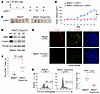 Figure 9
MAP4K2 suppresses Treg-mediated antitumor immunity in mice. (A–G) Induction of syngeneic pancreatic cancer model in Treg-specific Map4k2-deficient mice and WT mice by subcutaneous injection with KPC pancreatic cancer cells. Tumor-bearing mice were intraperitoneally injected with 200 μg anti–PD-1 antibody on day 9, 12, and 15 (A). Tumor volumes of the tumor tissues on the back of tumor-bearing Treg-specific Map4k2-deficient (M4k2-deficient) mice or WT mice were measured from day 9 to day 18 (B). n = 5 per group. Tumor tissues were harvested from the back of mice on day 18 (C). The protein levels of MAP4K2, FOXP3, and vinculin of splenic CD4+CD25+ T cells were determined by immunoblotting analyses (D). Confocal images showed CD4 (green), FOXP3 (Red), and DAPI of tumor-infiltrating Treg cells (E). Scale bars: 10 μm. Tumor-infiltrating CD8+ T cells (F) and CTLA-4–positive CD8+ T cells (G) of tumor tissues were determined by flow cytometry. WT (Map4k2fl/fl); M4k2fl/+;Foxp3-Cre, Treg-specific Map4k2-deficient mice. *P < 0.05; **P < 0.01; ***P < 0.001 (2-tailed Student’s t test).
To evaluate whether MAP4K2 is a druggable target for cancer immunotherapy, the MAP4K2 kinase inhibitor TL4-12 (12) was administered to KPC tumor–bearing WT mice (Figure 10, A and B). The MAP4K2 inhibitor TL4-12 selectively suppressed the kinase activity of MAP4K2 but not other related members-MAP4K1 or MAP4K3 (Figure 10A). The FOXP3 levels were indeed decreased in the splenic T cells of mice treated with TL4-12 (M4K2 inh) (Figure 10C). The volumes of KPC tumor tissues in WT mice were very slightly decreased by anti–PD-1 treatment (Figure 10D). Consistent with the result of T-Map4k2 cKO mice, tumor volumes of anti–PD-1–treated WT mice were significantly decreased by TL4-12 treatment (Figure 10D). Moreover, the infiltrating Treg cells were decreased in the tumor tissues of TL4-12–treated mice compared with those of untreated (anti–PD-1 alone) mice (Figure 10E). The tumor-infiltrating CD8+ T cells were significantly increased in the tumor tissues of TL4-12–treated mice (Figure 10F). The data suggest that the MAP4K2 inhibitor efficiently suppresses Treg population in vivo, and MAP4K2 inhibitors may be potential therapeutics for cancer combination immunotherapy.
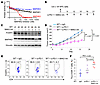 Figure 10
Syngeneic pancreatic cancer is inhibited by MAP4K2 inhibitor treatment in mice. (A) In vitro kinase assays using 50 ng each of purified MAP4K1 (HPK1), MAP4K2, and MAP4K3 proteins plus different concentrations of the MAP4K2 inhibitor TL4-12. IC50 of TL4-12 to MAP4K2 was 34.49 nM. (B–F) Induction of syngeneic pancreatic cancer model in TL4-12–treated mice by subcutaneous injection with KPC pancreatic cancer cells. Tumor-bearing mice were intraperitoneally injected with 200 μg anti–PD-1 antibody and the MAP4K2 inhibitor (M4K2 inh, TL4-12) on days 9, 12, 15, 18, and 21 (B). n = 4 per group. FOXP3 and MAP4K2 protein levels in the spleens of mice were determined by immunoblotting (C). Tumor volumes of the tumor tissues on the back of mice were measured from day 9 to day 22 (D). Infiltrating Treg (CD4+FOXP3+) cells of tumor tissues were determined by flow cytometry (E). Tumor-infiltrating CD8+ T cells of tumor tissues were determined by flow cytometry (F), n = 5, means ± SEM are shown. *P < 0.05; **P < 0.01 (1-way ANOVA and Tukey’s post hoc test). Data shown (A and C–F) are representative of 3 independent experiments.
Our results derived from cells and mice showed that MAP4K2 is a key kinase controlling Treg differentiation and is a potential target for cancer immunotherapy. Treg cells are abundant in the tumor tissue of cancer patients (23). To study whether MAP4K2 levels are associated with Treg population in human tumor tissues, we performed data mining of a published scRNA-seq dataset of human pancreatic cancer patients (24). The cells of the tumor tissues from 27 patients with pancreatic cancer were analyzed by scRNA-seq (24). The UMAP plot showed 36,891 tumor-infiltrating T cells among 148,335 cells (Figure 11A). Interestingly, 89 of 7,194 CD4 T cells in the tumor tissues from 27 patients with pancreatic cancer were MAP4K2 and FOXP3 double-positive (MAP4K2+FOXP3+) CD4+ T cells, which showed a correlation (linear regression, r = 0.51) between MAP4K2 and FOXP3 levels (Figure 11B). The tumor-infiltrating MAP4K2+FOXP3+ CD4+ T cells displayed a drastic induction of CD25, CTLA4, TNFRSF18, TNFRSF4, and BATF compared with other CD4+ T cells (Figure 11C). Moreover, MAP4K2 mRNA levels of the tumor-infiltrating CD4+ T cells or Treg (CD4+CD25+) cells were significantly increased in patients with cancer metastasis or with locally advanced cancer compared with resectable cancer (Figure 11, D and E). The frequencies of MAP4K2+ cells in the tumor-infiltrating CD4+ T cells or Treg (CD4+CD25+) cells were also increased in patients with cancer metastasis or with locally advanced cancer (Figure 11, D and E). In addition, MAP4K2 levels of the tumor-infiltrating CD4+ T cells were decreased in patients treated with chemotherapy (Supplemental Figure 11A). Consistent with the data of the original publication (24), the levels of the exhaustion markers CTLA-4 and TIGIT in the tumor-infiltrating CD8+ T cells were decreased in patients with pancreatic cancer treated with chemotherapy (Supplemental Figure 11, B and C). The data suggest that MAP4K2 promotes Foxp3 expression and Treg differentiation, contributing to cancer progression and tumor immunity.
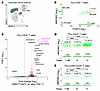 Figure 11
MAP4K2 transcripts are increased in infiltrating Treg cells of human pancreatic cancer patients. (A–E) scRNA-seq data showed the distribution of CD3+ T cells (blue), CD3+CD4+ cells (green), CD3+CD8+ cells (red), and other cells (gray) from pancreatic cancer tissues of 27 patients (A). Data are presented in Uniform Manifold Approximation and Projection (UMAP). MAP4K2 mRNA levels were correlated with FOXP3 mRNA levels in the tumor-infiltrating MAP4K2+FOXP3+ T cells of 27 patients with pancreatic cancer (B). The volcano plot of the selected differentially expressed genes in the tumor-infiltrating MAP4K2+FOXP3+CD4+ T cells and other tumor-infiltrating CD4+ T cells. FDR, false discovery rate (C). Plots show MAP4K2 mRNA levels of the tumor-infiltrating CD4+ T cells or CD4+CD25+ T cells from 20 untreated patients with different stages of pancreatic cancer (D and E). The folds were the least square means normalized to the least square mean of cells from resectable patients. The percentages of MAP4K2+ cells were shown in rectangles. ***P < 0.001 (Kruskal-Wallis test).


Copyright © 2026 American Society for Clinical Investigation
ISSN: 0021-9738 (print), 1558-8238 (online)